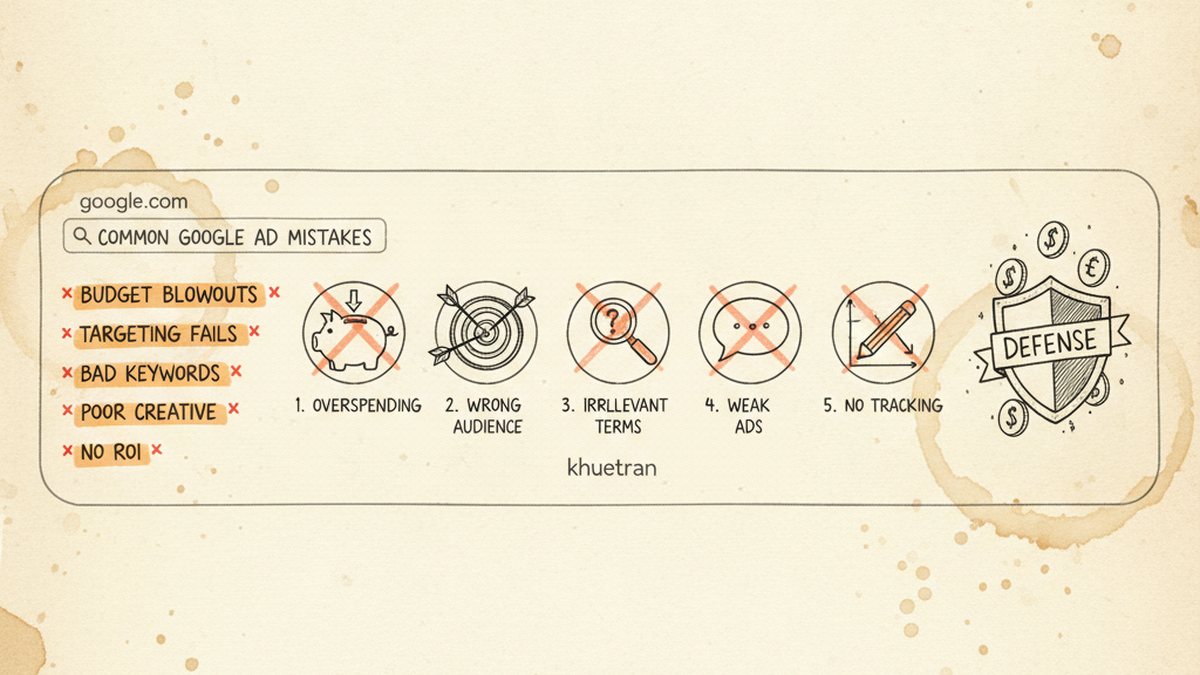
5 Branded Search Mistakes Wholesale Ecom Owners Make

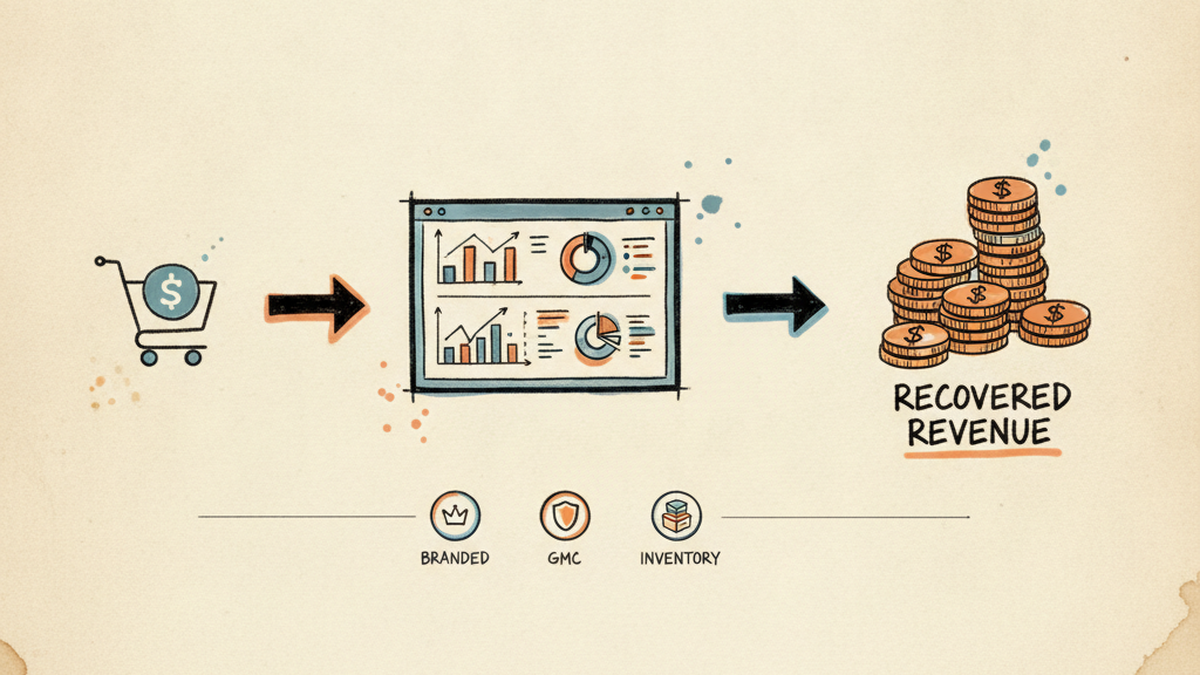
TL;DR. Most wholesale ecom owners under-spend on Branded Search because the dashboard makes it look “too obvious to bid on.” That assumption costs them roughly 15-25% of recoverable revenue every quarter. Below are the five specific mistakes I see across the wholesale ecom brands I run and the founders I advise, in order of how much money they leak.

  1. Treating Branded as “they would have found us anyway”
  2. Reading Branded ROAS in isolation from promotional activity
  3. Not bidding on competitor variations of your brand name
  4. Pausing Branded during inventory shortages
  5. Letting competitors sit on your brand SERP unchallenged

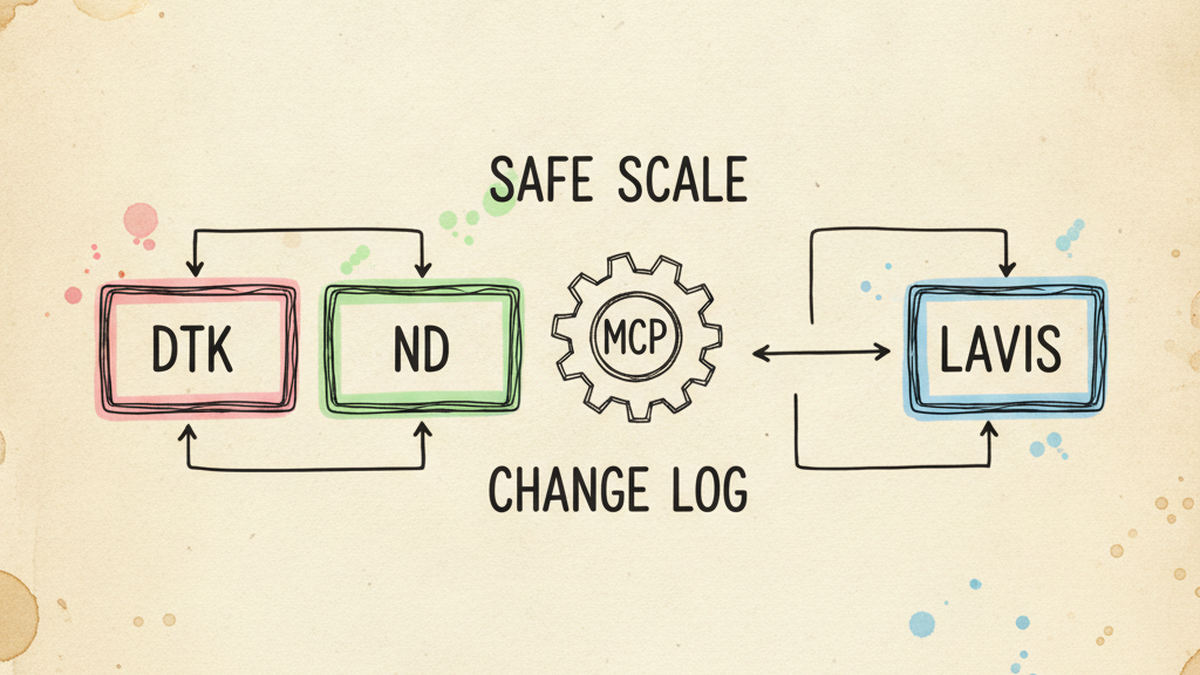
I run three US wholesale nail supply brands from Hanoi (DTK, ND, LAVIS). I have made every one of these mistakes at least once. Here is what each one actually costs and how to fix it.

Why Branded Search matters more for wholesale than DTC

When a consumer Googles “best red lipstick,” they are browsing. When a nail salon owner Googles “OPI gel polish bulk,” they are buying. The intent gap between a DTC searcher and a B2B/wholesale searcher is roughly 5-10x in purchase probability. That intent shows up most cleanly in Branded Search: a salon owner who types your brand name plus a category modifier (“DTK dip powder,” “Kiara Sky bulk wholesale”) is 60-90 days from a $300-2,000 order on average.

That makes Branded the single highest-ROAS line in a wholesale ecom ad account. It also makes it the single most under-defended one, because most operators treat it like a vanity metric instead of a moat.

Mistake 1: Treating Branded as “they would have found us anyway”

The mistake. Operator sees Branded ROAS at 12x and assumes those customers were going to convert organically anyway. So they cap Branded budget at the bare minimum, redirect spend to “real” prospecting, and feel clever for saving money.

Why it is wrong. When you pause Branded, your organic top result usually still ranks. But the SERP above it fills with three things: competitor Branded ads bidding on your name, marketplace listings (Amazon, eBay, Faire), and Google Shopping carousels that route the click anywhere except your store. The organic click-through rate on the #1 result drops from ~28% to ~13% the moment a paid ad sits above it. You did not save money. You handed cash to whoever bid in your place.

The fix. Bid Branded with a target Impression Share of 90%+ and an exact-match brand kit (brand alone, brand + category, brand + product, brand + “wholesale,” brand + “near me”). Cap by spend if you must, never by share. The break-even ROAS for Branded should be your operational gross margin divided by 1.2, not your blended account target.

Mistake 2: Reading Branded ROAS in isolation from promotional activity

The mistake. You celebrate when Branded ROAS jumps from 12x to 18x in a month. You attribute it to brand strength, run a victory lap in the team meeting, scale spend, and watch ROAS quietly drift back to 11x the following month.

Why it is wrong. Branded Search is a downstream signal of any promotional activity, not a measure of organic brand strength. When I run a flash promo on DTK, BRANDED searches across the whole nail-supply niche (including ND, even competitor brands) spike for 2-3 weeks. Customers cross-shop after seeing one promo ad. If you scale Branded budget during that halo and the promo ends, you are now over-bidding on faded interest.

The fix. Tag every Branded performance review with the question “was there a promo on any brand in our portfolio in the last 30 days?” If yes, discount the Branded ROAS lift by 50% before making budget decisions. Track Branded by impression volume, not just ROAS, because impression volume is the better leading indicator of real demand.

Mistake 3: Not bidding on competitor variations of your brand name

The mistake. You bid on “DTK Nail Supply” and call it done. Meanwhile customers are searching “DTK Nails,” “DTK Supply,” “D-T-K nail,” “dtknailsupply.com,” and 30 other variants you never added to your kit.

Why it is wrong. Google’s loose-match logic does not catch these for you on Search the way it does on Performance Max. Each missed variant is a query a competitor can bid on for cents because your account does not register it as relevant. I once found 14 unique brand variants for DTK that we were not bidding on, total monthly search volume around 8,000. Competitor brands were bidding on 11 of them for an average CPC of $0.42.

The fix. Pull a 90-day Search Terms report filtered to queries containing your brand. Sort by impressions. Anything with more than 50 impressions/month that is not in your Branded keyword list goes in. Re-run quarterly. Build a brand misspelling kit (people typing “DKT” instead of “DTK”) and bid on those too. Misspellings convert at the same rate as correct spellings, often for half the CPC.

Mistake 4: Pausing Branded during inventory shortages

The mistake. A top SKU goes out of stock. Operator pauses the entire Branded campaign because “no point driving traffic to OOS.” The campaign sits paused for 2-4 weeks. When it relaunches, learning resets and CPC is 30% higher for a month.

Why it is wrong. Branded traffic does not search for that one SKU. They search your brand because they want what your brand sells, broadly. Sending them to a category page or “what’s in stock now” landing page captures 60-70% of the order they would have placed. Pausing the entire campaign loses 100% of it plus the learning reset penalty.

The fix. Build a “smart OOS” routing layer at the campaign level. When a high-ROAS SKU goes OOS, swap the destination URL for that ad group to a related-category landing page with a banner saying “back in stock soon, here is what we have now.” Never pause the campaign. I have automated this for DTK so the swap happens within 90 minutes of an inventory alert.

Mistake 5: Letting competitors sit on your brand SERP unchallenged

The mistake. A competitor starts bidding on your brand name. You see their ad above your organic listing. You either complain to Google (rarely works) or accept it as a “fact of life.”

Why it is wrong. Every click on a competitor ad above your organic listing is a high-intent customer who specifically typed your brand and got intercepted. The economics: their CPC is high (because you are bidding too, presumably), their landing page is generic (not your product catalog), conversion rate is 30-50% lower than your own. They are losing money on the click. But you are losing the customer.

The fix. Two moves. First, dominate your own SERP visually: bid #1 position with a 5-out-of-5 ad-strength asset group, ensure sitelinks include your top 4 categories, enable callouts that mention free shipping or wholesale pricing. Second, reverse the attack: bid on their brand name with an honest comparison ad (“Looking for [Competitor]? See how we compare on bulk pricing”). Most wholesale niches have a quiet equilibrium where everyone bids on everyone, and the operators who stop participating get poached fastest.

Quick audit checklist

  • Branded Impression Share target: 90%+ on exact-match brand kit
  • Brand variant kit reviewed in the last quarter (including misspellings)
  • Branded performance always read alongside last-30-days promo calendar
  • OOS-routing layer in place for high-ROAS SKUs (no full campaign pause)
  • Competitor bid on your brand: flagged within 7 days and met with a counter
  • Your own ad sitting #1 above organic with sitelinks + callouts active

If you can tick fewer than 4 of those, your Branded line is leaking somewhere between 15-30% of recoverable revenue. Worth fixing this quarter.


Want me to audit yours?

If you run a wholesale ecom brand at $50k-500k MRR and you suspect Branded is leaking, I run a free 30-minute audit call. We screen-share your Ads dashboard, I show you the leaks live, and you walk away with a written punch list whether we work together or not.

Email [email protected] with your brand name, monthly revenue ballpark, and a screenshot of your last 30 days of Branded Search performance. I reply within 48 hours.

If you want more like this, I write monthly-ish at khuetran.com. Operator-led notes on running wholesale ecom in 2026.


FAQ

What ROAS should I expect from Branded Search in wholesale ecom?

For B2B wholesale ecom, Branded ROAS typically lands between 8x and 15x depending on niche maturity and competitor pressure. If yours is below 5x, you are bidding too broadly or your landing pages are misaligned with intent. If it is above 20x, you are under-bidding and competitors are capturing share you cannot see in your own dashboard.

Is bidding on competitor brand names ethical?

It is legal in the US and most jurisdictions (with trademark constraints on the ad copy itself). Ethically: if competitors bid on yours, treating it as off-limits puts you at a unilateral disadvantage. The honest version is a comparison ad with clear value-prop differentiation, not a misleading “we are [Competitor]” copy.

How often should I refresh my brand variant keyword kit?

Quarterly minimum. New misspellings emerge as your brand grows. Voice search introduces phonetic variants. International customers introduce diacritic variants. Pull a 90-day Search Terms report, filter to queries containing your brand, sort by impressions, add anything new with 50+ monthly impressions.

What happens if I pause Branded for a week to “test” organic strength?

Two things, both bad. First, your organic CTR drops by 40-50% on Branded queries because competitor ads fill the gap above you. Second, when you restart, the campaign re-enters learning phase and CPC is 25-35% higher for 2-3 weeks. “Pause to test” is one of the most expensive experiments in paid acquisition. There are cleaner ways to measure organic brand strength (incrementality tests via geographic holdouts).

Do these mistakes apply to DTC ecom too?

Mistakes 1, 3, and 5 apply to any ecom. Mistakes 2 and 4 are sharper for wholesale because basket sizes and decision cycles are larger, so the cost of a wrong call compounds harder. The fundamentals (defend your SERP, refresh variant kits, never pause during demand) hold across both.